Indian IT Industry - Overview


IT & ITeS in India - Brief Introduction

Over the past few years, the Indian information technology (IT) and IT enabled Services (ITeS) industry has been on a steady growth trajectory. The IT industry, alone, has played a pivotal role in placing India on the world map as a major knowledge-based economy and outsourcing hub. The major sub-segment, that entails Business Process Outsourcing (BPO), is re-inventing itself and experiencing a paradigm shift from being a volume-oriented proposition to a value-oriented proposition by expanding its scope of services and providing substantial high-end solutions in the areas of Data Analytics, Legal Process Outsourcing, etc.


The number of internet users in India crossed the 100-million mark in September 2011, growing 13 per cent over last year's figure of 87 million, according to the latest report of the Internet and Mobile Association of India (IAMAI) co-prepared with research firm IMRB. The study anticipates India's internet population to grow to 121 million by December 2011. Further, the country's broadband subscriber base stood at 12.69 million in August 2011, according to data released by the Telecom Regulatory Authority of India (TRAI).


Competitive Landscape

After personal computers (PCs) and laptops, tablets are mushrooming as a major competitive avenue wherein vendors are striving hard to launch more affordable devices for the Indian market. Second quarter of 2011experienced the release of the iPad2 in India in less than 50 days after its US launch while Samsung is scouting for 40 per cent share of the Indian tablet market in 2011.


In the enterprise software segment, US giant Oracle claims to cater around 7,000 clients across the Indian government and private sectors; recent wins being Punjab National Bank (PNB) - India's second-largest public sector bank and Hindustan Petroleum Corporation (HPCL) - another Indian public sector organ. Meanwhile, Indian IT companies like Wipro, Infosys, TCS, HCL and Mahindra Satyam are developing their technologies to entail cloud computing applications and solutions for various segments ranging from financial services and banking to manufacturing.

IT & ITeS - Key Developments and Investments

Between April 2000 and August 2011, the computer software and hardware sector received cumulative foreign direct investment (FDI) of US$ 10,787 million, according to the Department of Industrial Policy and Promotion (DIPP).
  • Monster India has launched an online campus hiring initiative - 'Monster College' – wherein it will collaborate with educational institutions across India and connect them with over 20,000 employers for campus placements.
  • Investor Relations Global Rankings (IRGR), a New York-based organisation, has ranked Technology giant Infosys as the country's best company for corporate governance practices, financial disclosure procedures, IR website and online annual report. There were more than 80 companies that registered themselves for the rankings.
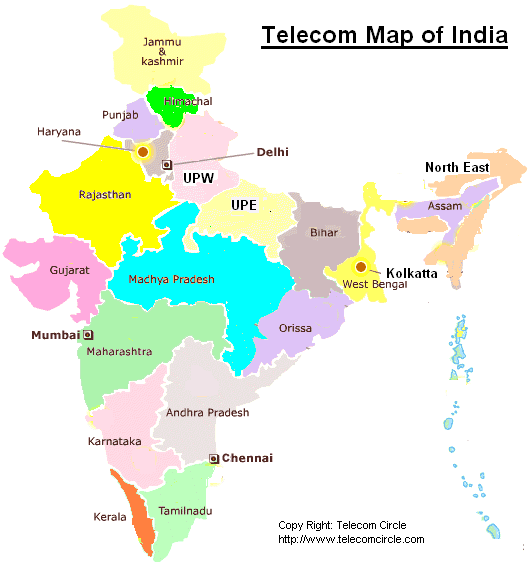
  • Tower infrastructure company Indus Tower is looking for a partner to provide end-to-end IT solutions and Indian tech-biggies like Infosys, IBM and Wipro are in discussions with the former for the same. The contract, potentially in the range of Rs 2,430-2,916 crore (US$ 500-US$ 600 million), would involve areas such as infrastructure management, application development and other related managed services and would span for 8-10 years. Indus Tower, a joint venture firm between Bharti Group, Idea Cellular and Vodafone Essar, owns 110,000 towers and operates 16 out of the 22 telecom circles.

  • Google, with its partner web hosting firm HostGator, has announced that it will offer free web domain names to small and medium businesses (SMBs) in India in order to boost internet usage in Asia's third largest economy. The company will maintain the websites for a year without any charges and at the end of the first year, users will be asked to pay a nominal fee if they wish to renew their domain name. India is shelter to around 8 million SMBs of which about 400,000 have a website and 100,000 have active online presence, said Google. Hence, the market poses a great potential for growth.
Indian Telecom Sector - An Overview


The Indian telecommunication sector in India is the third largest sector across the globe and the second largest among the emerging economies of Asia. This rapid growth has been possible due to various proactive and positive decisions of the Government and contribution of both the public and the private sector. The rapid strides in the telecom sector have been facilitated by liberal policies of the Government providing thetelecom equipments an easyaccess to the market and a fair regulatory framework for offering telecom services to the Indian consumers at affordable prices.


The sector also witnessed a substantial change in terms of mobile versus fixed phones and public versus private participation. The preference for use of wireless phones has also beenpredominant in the sector. Participation of the private entities in the telecom sector is increasing rapidly, alongside, giving rise to enormous growth opportunities. There is a clear distinction between the Global Satellite Mobile Communication (GSM) and Code Division Multiple Access (CDMA) technologies used within the Indian telecom sector.

Market size

The sale of mobile devices in India will show of rise of 8.5 per cent in 2012 by growing up to 231 million units from 213 million units last year, according to a research report from Gartner. The research firm says that the Indian mobile handset market is expected to show steady growth through 2015 when end-user sales will surpass 322 million units. The Indian mobile device market is very competitive with more than 150 manufacturers. Smartphone sales in India made up 6 per cent of device sales in the first three quarters of 2011, and this share is expected to increase to 8 per cent in 2012. The Indian mobile device market is driven by the lowest call rates in the world and dominated by low-cost devices, which account for 75 per cent of sales in India in 2011.


Indian Telecommunication - Major Investments

Nokia has unleashed its biggest-ever marketing campaign in India for the launch of its Windows-based smartphone Lumia, so as to keep itself relevant in a market being swarmed by Google Android phones such as Samsung Galaxy range. This is the first product under the Nokia-Microsoft partnership and Nokia has put in high stakes in the Indian market.

Citi India has launched a cash management service which will help its corporate customers collect receivables from their retailers or customers using mobile payment technology. Known as Cash-To-Mobile, this solution will increase the efficiency of collection for the company. It will also help in reducing the cost of transaction and will ensure safe transfer of money.


Nokia Siemens Networks has decided to ramp up its India operations in three core areas of mobile broadband, manufacturing and Global Network Operations Centres. "India will be the hub of the transformation that NSN has initiated globally. Investments into India are being ramped up in key focus areas, including global delivery centres and manufacturing. So all of these facilities which gives us global scale and advantage of centralisation is being ramped up, MrSandeepGirotra, head of Nokia Siemens in India, told Business Line.

The implementation of India's low-cost telecom model in the African market seems to have paid dividends for the country's largest company in the sector, BhartiAirtel, with the company crossing 50 million subscribers in mobile operations. Bharti acquired Zain's assets in 16 African countries in June 2010, with a subscriber base of 42 million, brought down to an active user base of 36 million. In these 17 months, it has got 14 million users, on the back of low and innovative rate plans, it said. It has 173 million subscribers in the Indian market.

Indian Telecommunication - Policy Initiatives

The Telecom policy 2011, will replace the existing framework that has been in place since 1999, and it aims to make the country's telecommunications sector more transparent, relax merger and acquisition norms to encourage consolidation and also give more teeth to sector regulator Telecom Regulatory Authority of India (TRAI). The new policies by the Indian Government also proposes to do away with roaming charges, introduce a stronger customer grievance redressal mechanism, recognize telecoms as an infrastructure sector giving it tax concessions, and extend preferential status to 'Made in India' hardware products, thereby strengthening the Indian Telecom Industry for future challenges.

Indian Telecommunication - The Road Ahead

The Indian telecom sector is one of the fastest growing sectors in the Indian economy during the past 4 years and has witnessed strong competition as a result of which tariffs have decreased by significant margins, promotion of customer and industry friendly policies and regulations. This has led to a healthy competition scenario within the sector. With a target to further increase the opportunities in the sector, the Indian government is taking proactive measures to develop this sector with the help of the various players in this segment. India, with its telecom success story, represents one of the sought after destinations for investment in the telecom sector.